
Why Every Guest House Needs a Unified Property Management System
A unified PMS brings bookings, rooms, payments, housekeeping, and guest communication into one reliable system—helping guest houses save time and deliver better stays.
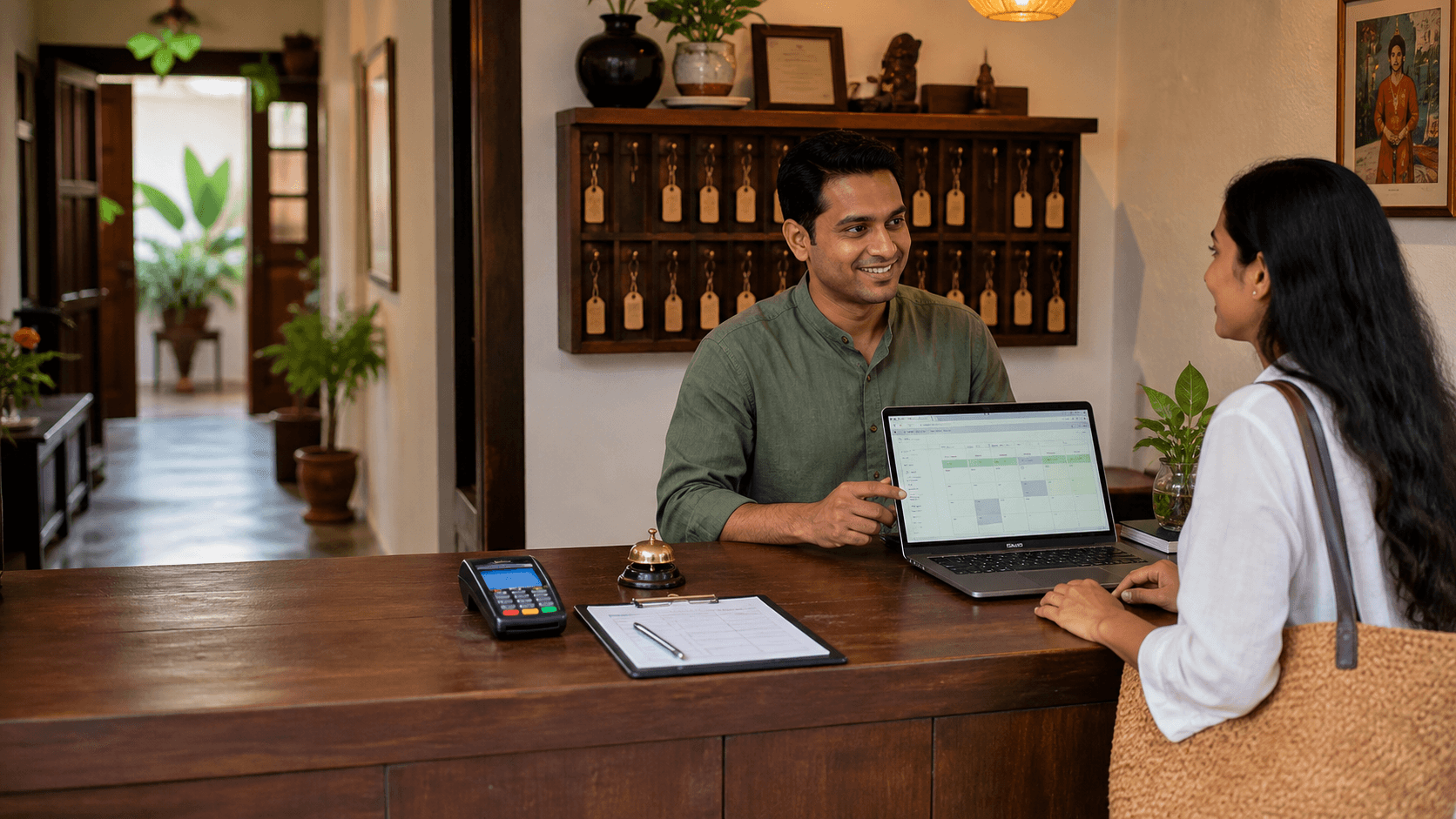
Running a guest house looks simple from the outside: accept a reservation, prepare a room, welcome the guest, and collect payment. Behind the desk, however, even a small property is coordinating availability, rates, guest requests, housekeeping, payments, and reports at the same time.
When those tasks live in separate notebooks, spreadsheets, inboxes, and apps, the team spends more time reconciling information than serving guests. A unified property management system brings those moving parts together and gives every team member the same reliable view of the business.
What a unified PMS means for a guest house
A unified PMS is more than a digital reservation book. It connects the daily work of the front desk, housekeeping, management, and finance around one guest record and one source of room availability.
For an independent property, that matters because the same person may handle several roles during one shift. A manager should not need to switch between systems to confirm a booking, check whether a room is ready, record a payment, and answer a guest question.
The right property management system keeps these workflows connected while remaining straightforward enough for a small team to use every day.
1. Stop double bookings before they happen
Double bookings usually begin with fragmented availability. A room is sold through one channel, but another calendar is not updated quickly enough. The mistake may only become visible when two guests expect the same room.
A unified PMS updates the property’s central inventory as reservations are created, changed, or cancelled. When connected with channel management features, the same availability can flow across direct and third-party booking sources. That reduces manual updates, awkward guest conversations, and the cost of relocating a booking.
2. Give the front desk one reliable workspace
A front-desk shift moves quickly. Staff need to know who is arriving, who has checked out, which balances are due, which rooms are blocked, and which guests have special requests. Searching across messages and paper notes creates delays exactly when the lobby is busiest.
With a unified PMS, arrivals, departures, room status, guest history, and payment information sit in one operational view. Handoffs become clearer because the next shift sees the same information instead of relying on memory or an incomplete notebook entry.
3. Coordinate housekeeping without constant calls
Room readiness is one of the most common friction points in a guest house. Reception may promise an early check-in without knowing that a room still needs attention, while housekeeping may not know that a departure has already happened.
A shared room-status workflow lets housekeeping mark rooms as dirty, in progress, inspected, or ready. The front desk sees those changes immediately. Managers can prioritise early arrivals and maintenance issues without chasing updates through phone calls or messaging groups.
4. Keep payments and reporting connected
Guest houses often accept a mix of deposits, cash, cards, bank transfers, and online payments. If the reservation and payment records are separate, it becomes easy to miss a balance or spend hours matching transactions at the end of the day.
A unified system attaches charges and payments to the correct stay. It gives the team a cleaner folio at checkout and gives the owner a more dependable view of occupancy, revenue, outstanding balances, and daily performance. Better records also make night audits and month-end reviews much less stressful.
5. Deliver a more personal guest experience
Good hospitality depends on remembering the details. A returning guest may prefer a quieter room, request an airport pickup, or need breakfast at a particular time. Those preferences are difficult to use when they are buried in old messages.
A unified guest profile keeps useful stay history and notes accessible to the team. Staff can prepare before arrival, respond consistently, and avoid making guests repeat themselves. The result feels personal, even when the property is busy or a different employee is on duty.
6. Manage the property without always being on-site
Many guest-house owners remain closely involved in daily operations but cannot stand at reception all day. Without live information, they depend on calls and end-of-day summaries to understand what is happening.
A cloud-based PMS provides a current view of bookings, occupancy, room status, and revenue from anywhere with appropriate access. This makes it easier to support the team, spot problems earlier, and make decisions based on the operation as it is now—not as it looked yesterday.
What to look for when choosing a guest-house PMS
Start with the workflows your team performs every day. The system should make reservations, check-in, room assignment, payments, housekeeping updates, and reporting easier to complete and easier to audit.
Look for clear permissions, simple training, responsive support, and the ability to grow into direct booking or channel integrations. It should also suit the realities of an independent hospitality business rather than forcing a small guest house to operate like a large chain.
If you manage rooms, short stays, or a small hospitality team, explore how FlowGrid supports hotels, motels, and independent properties. The goal is not to add more software. It is to replace scattered tools with one dependable operating system.
The practical next step
A unified PMS will not replace genuine hospitality. It removes the repetitive coordination that gets in its way. When availability, rooms, payments, and guest information agree, the team can spend less energy fixing preventable errors and more time creating a stay people want to recommend.
Map your current booking-to-checkout process and mark every place where staff copy information, wait for an update, or search for an answer. Then book a FlowGrid demo to see how those steps can work together in one system.